Digitalowl
- Home
- Why Beginners Should Build Small Projects Before Learning Everything
- What to Power First During a 72-Hour Blackout
Recent posts
-
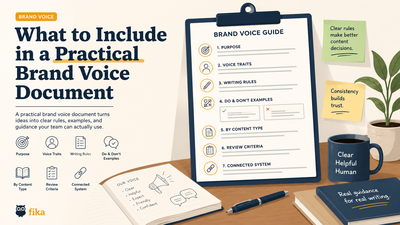
How a Template Pack Turns Voice Ideas Into Writing Rules
They know the brand should sound clear, helpful, expert, friendly, confident, or human. They may have a few notes from strategy work, a short brand deck, a messaging document, or examples of content they like. But when someone needs to write a landing page, edit an email, review an AI draft, or brief a freelancer, those ideas are often too loose to guide the actual work. This is where a template p…

- seo
- website
- +8
-
Why Brand Voice Documents Need More Than Tone Adjectives
Friendly. Professional. Clear. Confident. Human. Helpful. Expert. These words are not useless. They can describe the general direction of a brand voice. But they are not enough to guide real writing. A writer cannot always turn “friendly” into a better landing page section. An editor cannot always use “professional” as a clear review standard. A content team cannot rely on “human” when deciding ho…

- seo
- landing-page
- +3
-
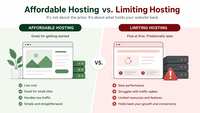
The Difference Between Affordable Hosting and Limiting Hosting
Low-cost hosting is not automatically a bad choice. For many websites, affordable hosting is a practical starting point. A small business site, a personal blog, a simple portfolio, or a new project does not always need an expensive hosting setup from day one. Paying less at the beginning can be reasonable, especially when traffic is low and the site does not yet depend on complex features. The rea…
- hosting
- digital-marketing
- +5
-
What Makes WooCommerce Performance Different From a Normal Website
A WooCommerce store may look like a normal website at first. It has pages, images, menus, buttons, and written content. A visitor can open the homepage, read product descriptions, move between pages, and click links just like on many other WordPress sites. But behind the scenes, WooCommerce has a different job. It is not only showing information. It is also handling products, prices, stock, carts,…

- woocomerce
- ecommerce
- +7
-
Why Growing Online Stores Need Better Server Resources
An online store can look simple from the outside. A visitor opens a product page, checks the price, adds an item to the cart, and moves toward checkout. But behind that simple path, the website may be doing much more work than a normal content page. A blog article can often be cached and served quickly. An online store usually has more live information to process. Prices, stock status, product var…

- ecommerce
- woocomerce
- +5
-
How Product Pages Become Heavy Over Time
A WooCommerce product page often starts as a simple sales page. It shows the product name, images, price, short description, and an add-to-cart button. At that stage, the page may feel light because there are not many extra features around it. But product pages rarely stay simple for long. As the store grows, the owner usually adds more images, more product details, more trust signals, more plugi…

- woocomerce
- ecommerce
- +4
-
Why WooCommerce Checkout Is Harder to Optimize
WooCommerce checkout is not a normal website page. A homepage can often be cached. A blog post can often be served quickly with fewer dynamic changes. A simple landing page can usually be optimized by reducing scripts, compressing images, improving layout, and removing unnecessary elements. Checkout is different because it has to process real customer data in real time. That is why WooCommerce che…

- woocomerce
- hosting
- +3
-
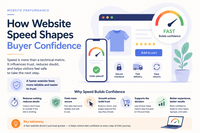
How Website Speed Shapes Buyer Confidence
Website speed does not only affect how quickly a page appears. It also affects how confident visitors feel while using the site. A fast website feels easier to trust. Pages open smoothly. Buttons respond when clicked. Forms do not feel stuck. Checkout steps move without confusion. The visitor does not have to stop and wonder whether the website is working properly. That matters because confidence …
- woocomerce
- online-store
- +3
-
Why Traffic Does Not Always Turn Into Leads
More traffic usually feels like a clear win. More people visit the website, analytics start looking better, and the site seems more active than before. For many website owners, this creates the impression that growth is already happening. But traffic and leads are not the same thing. Traffic means people arrived. Leads mean people trusted the website enough to take the next step. Between those two…

- conversion-rate-optimization
- website
- +3
-
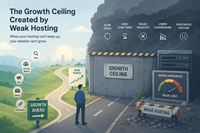
The Growth Ceiling Created by Weak Hosting
You publish more content. You attract more visitors. You add more pages, tools, forms, images, plugins, tracking scripts, and business features. The website becomes more useful, more active, and more important for the business. But growth also creates pressure. A website that worked well at the beginning may start feeling slower later, not because something is suddenly broken, but because the host…
- hosting
- website
- +4