How Slow Landing Pages Reduce Conversions
A landing page has one main job.
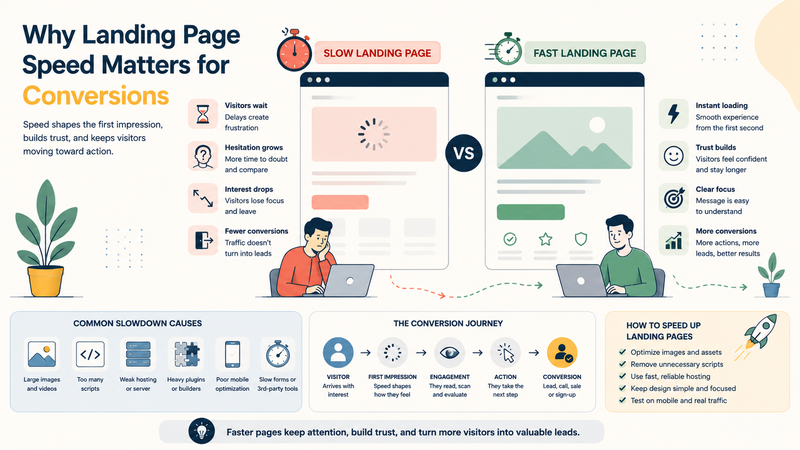
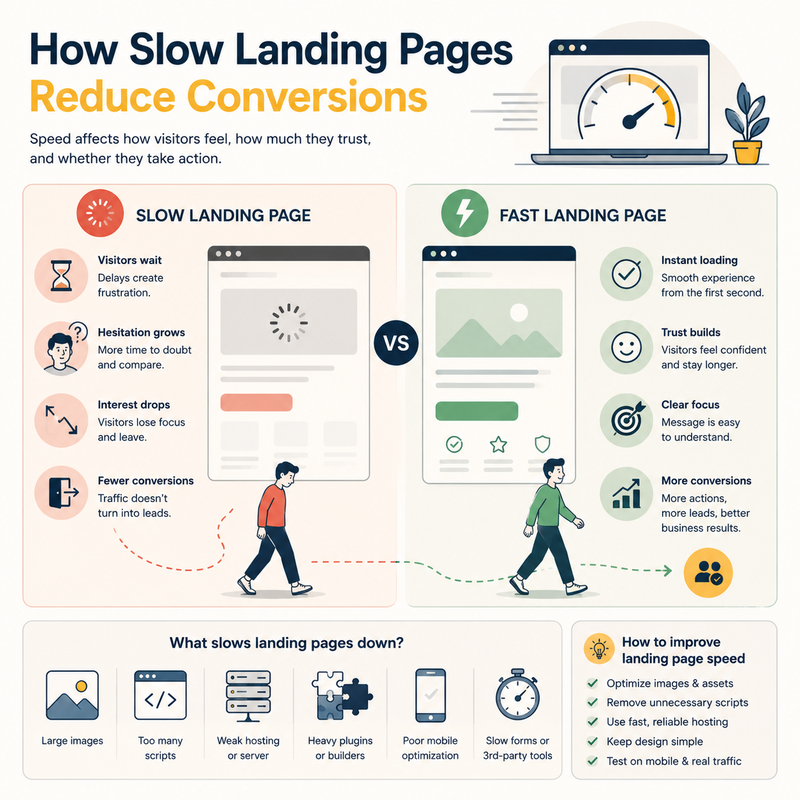
A landing page has one main job.
It should help a visitor understand the offer, trust the next step, and take action. That action may be filling out a form, booking a call, starting checkout, downloading a guide, joining an email list, or clicking through to a deeper page.
But when a landing page is slow, the conversion path becomes weaker before the visitor even reads the full message.
The problem is not only that people dislike waiting. The deeper problem is that slow loading changes how the page feels. A page that should feel clear and direct starts to feel uncertain. A simple action starts to feel heavier. A visitor who arrived with interest may begin to hesitate before the page has a chance to persuade them.
That is why landing page speed is not just a technical issue. It is part of conversion.
A landing page depends on momentum
Most landing page visitors arrive from somewhere else.
They may come from search, social media, email, an ad, a referral link, or another article. Before they land on the page, they already have an expectation. Something made them click. Something suggested that the page might help them solve a problem or make a decision.
The landing page needs to protect that moment of interest.
If the page loads quickly, the visitor can continue naturally. They can read the headline, understand the offer, scan the page, and decide what to do next. The experience feels smooth because there is no obvious interruption between the click and the message.
If the page loads slowly, that momentum is interrupted.
The visitor has time to doubt the click. They may wonder if the page is broken. They may switch tabs. They may compare another option. They may close the page before the offer is even visible.
This is why slow landing pages often reduce conversions quietly. The business may still receive traffic, but fewer visitors reach the point where they are ready to act.
Speed affects the first impression
A landing page usually has very little time to make a first impression.
The visitor does not know the page yet. They may not know the brand. They may not be patient. If the page feels slow, heavy, or unstable, that first impression becomes weaker.
This matters because conversion is partly emotional. Users may not analyze every technical detail, but they feel the experience. A fast page feels more prepared. A slow page feels less reliable. A page that shifts, delays, or responds late can make the business seem less professional, even if the offer is good.
Slow loading can create several negative signals at once:
the site feels less trustworthy;
the offer feels less urgent;
the page feels harder to use;
the visitor has more time to hesitate;
the call to action feels less inviting;
mobile users may leave before reading;
campaign traffic becomes less valuable.
These signals may look small individually. Together, they can reduce the number of people who continue from interest to action.
The broader relationship between speed and conversion is explained in the main funnel article here:
https://medium.com/@wwwebadvisor/how-website-speed-affects-conversions-489751a34a01
That article is the main destination for this topic because it explains why website performance affects trust, decisions, forms, checkout, and lead generation.
Slow pages make the offer work harder
A strong offer can still fail if the page experience creates friction.
The landing page may have a clear headline. The service may be useful. The price may be fair. The call to action may be well written. But if the page loads slowly, all of those elements have to work harder.
The visitor arrives with attention, but the delay weakens that attention. By the time the page becomes usable, the user may already feel less interested. Instead of reading with focus, they may scan quickly or leave early.
This is especially damaging when the landing page is connected to paid traffic or active promotion. Every click has value. If slow loading reduces the percentage of visitors who stay, the campaign becomes less efficient.
A slow landing page can waste:
SEO traffic from pages that already rank;
paid clicks from ads;
social traffic from posts or pins;
referral traffic from partner mentions;
email traffic from newsletters;
internal traffic from related articles.
That is why landing page performance should be checked before traffic campaigns, not only after problems appear.
The problem is bigger on mobile
Slow landing pages are usually more painful on mobile.
Mobile visitors may have smaller screens, weaker connections, more distractions, and less patience. They are often checking pages quickly while doing something else. If the page is heavy, unclear, or slow to become usable, they may leave almost instantly.
A landing page that feels acceptable on desktop can feel frustrating on a phone.
The problem becomes worse when the page has large images, heavy scripts, pop-ups, embedded media, tracking tools, animations, or layout shifts. These elements may look good in design review, but they can make the real mobile experience slower and less stable.
Mobile conversion also depends heavily on ease of action. Buttons need to be visible. Forms need to be simple. Text needs to be readable. The page needs to respond quickly after taps.
If the visitor has to wait, zoom, scroll too much, or fight the layout, the conversion path becomes weaker.
Visitors leave when the next step feels delayed
Landing pages are built around the next step.
That step might be a button, form, checkout link, demo request, email signup, or product selection. The page can only convert if that next step feels easy enough to take.
Slow performance adds delay before the action and sometimes after the action. The visitor may wait for the page to load, then wait again for the form to appear, then wait again after pressing submit. Each delay creates another chance to leave.
This is why conversion loss often happens near the end of the path.
A visitor may understand the offer and still abandon the page because the final action feels slow or uncertain. They may click the form and hesitate. They may press the button and see no fast response. They may wonder if the submission worked. They may decide not to continue.
This connects directly with the previous Fika support article about traffic and leads:
https://digitalowl.fika.bar/why-traffic-does-not-always-turn-into-leads-01KRY74J2DPK25BFKT762S1B2K
That article explains why visits do not automatically become business results. A slow landing page is one of the clearest reasons this gap appears.
Traffic growth can make slow landing pages worse
A landing page may seem fine when only a few people visit it.
The page loads well enough during testing. The form works. The owner checks it once or twice and sees no obvious problem. But real traffic can create different conditions.
When more visitors arrive at the same time, the server has more work to do. The page may depend on database queries, plugins, tracking scripts, forms, third-party tools, or dynamic content. If the hosting setup is weak or already close to its limits, the landing page can become slower during the exact moment when it should perform best.
This is especially important during campaigns.
A landing page may be promoted through email, social media, search, paid ads, or content links. If the page slows down during a traffic spike, the campaign may look less successful than it really is. The issue may not be the offer or the audience. The issue may be that the page experience could not handle the attention.
A related main queue article explains this pressure from the traffic side:
That idea matters for landing pages because conversion pages often receive concentrated traffic. When they slow down under pressure, the business can lose leads at the most valuable moment.
Landing page friction is often a combination problem
Slow landing pages are rarely caused by one single thing.
Sometimes the problem is hosting. Sometimes it is image size. Sometimes it is too many scripts. Sometimes it is a heavy page builder, too many plugins, tracking tools, embedded media, or a poorly optimized form. Often, several small issues combine into one slow experience.
Common sources of landing page friction include:
large hero images;
too many third-party scripts;
heavy tracking and analytics tags;
slow server response time;
overloaded shared hosting;
complex page builder output;
unoptimized fonts;
pop-ups and overlays;
slow forms or CRM integrations;
layout shifts while the page loads;
weak mobile optimization;
too many elements before the call to action.
The visitor does not care which specific element caused the delay. They only experience the result. The page feels slower than expected, and the action feels less attractive.
That is why landing page optimization should not focus only on surface design. It should also look at the technical path that delivers the page to the visitor.
A slow page can make good copy less effective
Copywriting matters, but copy works only when people actually read it.
A landing page headline may be strong, but if it appears too late, fewer visitors will see it. The offer may be clear, but if the page jumps while loading, the reading experience becomes weaker. The call to action may be persuasive, but if the button responds slowly, confidence drops.
Good copy needs a stable environment.
The page should let visitors understand the message without unnecessary waiting or confusion. A fast page keeps attention on the offer. A slow page moves attention away from the offer and toward the experience itself.
That shift is dangerous for conversions.
The visitor should be thinking about the value of the product, service, or next step. They should not be thinking about whether the page is loading, whether the form works, or whether the site is reliable.
Slow pages reduce trust before the user decides
Trust is built before the visitor takes action.
A person may not be ready to submit personal details, request a quote, or start checkout unless the page feels safe enough. Slow loading can weaken that sense of safety. It can make the site feel outdated, overloaded, neglected, or less professional.
This does not mean users consciously judge the hosting setup. They usually do not. But they do judge the feeling of the page.
A landing page that loads smoothly sends a simple signal: this site is ready for me. A landing page that loads slowly sends a different signal: this may not be worth my time.
A related Fika article explains the business cost of this kind of performance problem:
That article fits this topic because the cost of slow performance often appears as lost leads, not just lower speed scores.
What a better landing page experience should do
A better landing page does not need to be complicated.
It should load quickly, explain the offer clearly, and make the next action easy. The design should support the message instead of slowing it down. The page should feel stable on mobile and desktop. The visitor should not have to fight the layout or wait too long for the action step.
A stronger landing page experience usually includes:
a clear headline visible quickly;
a short explanation of the offer;
fast loading above the fold;
compressed and properly sized images;
limited unnecessary scripts;
visible call-to-action buttons;
simple forms;
strong mobile usability;
trust signals near the action;
fast response after clicks;
stable layout while loading.
The goal is not only to improve a speed score. The goal is to protect the visitor’s attention.
A landing page should make the conversion path feel natural. It should not create small doubts at every step.
How to review a slow landing page
A practical review can start with the pages that already matter most.
These may be pages used in campaigns, pages receiving search traffic, service pages, product landing pages, pricing pages, or pages that collect leads. Instead of reviewing every page at once, start where traffic and conversion intent already exist.
Useful questions include:
Does the page load quickly on mobile?
Is the main message visible without waiting too long?
Are images heavier than they need to be?
Are scripts delaying the page?
Does the call to action appear early enough?
Does the form respond quickly?
Does the page stay stable while loading?
Does performance change during traffic peaks?
Are visitors leaving before reaching the action?
Is the page connected to the right next step?
These questions help separate content problems from performance problems. Sometimes the message is weak. Sometimes the offer is unclear. But sometimes the page is simply too slow to let the message do its job.
Faster landing pages protect conversion intent
People who arrive on a landing page are not just random visitors.
Many of them clicked with some level of intent. They wanted to learn something, compare something, solve something, or take a step forward. That intent is valuable. A slow page puts it at risk.
A fast landing page protects that intent. It lets the visitor move from click to message, from message to trust, and from trust to action. It reduces the time available for doubt. It makes the next step feel easier.
A slow landing page does the opposite. It stretches the decision. It adds friction. It makes the visitor work harder before they even know whether the offer is right.
That is why landing page speed should be treated as part of the conversion system.
Traffic can bring people to the page. Copy can explain the offer. Design can guide attention. But performance helps keep the whole path moving.
When the page is fast, clear, and stable, more visitors have a real chance to become leads.
Comments
No comments yet. Be the first to comment!