The Hidden Cost of Saving Too Much on Hosting
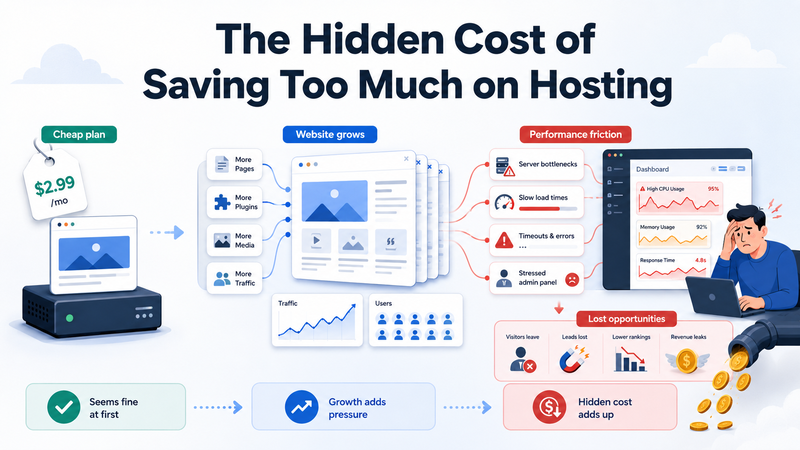
Cheap hosting can look like a smart decision when a website is small.
At the beginning, the logic feels simple. You need a website online. You do not want to spend too much. The site has only a few pages, a small blog, maybe a contact form, and not much traffic yet. In that situation, a low-cost hosting plan can seem completely reasonable.
And sometimes it is reasonable.
The problem starts when “cheap enough for now” slowly becomes “too limiting for what the website needs next.”
That is where the hidden cost appears.
The lowest price is not always the real cost
Hosting is easy to compare by monthly price. One plan costs a few dollars. Another costs more. A third one looks expensive. From the outside, it may seem like the cheapest option saves money automatically.
But websites do not create value only by being online. They create value when they load properly, stay stable, support marketing, help visitors move through pages, and allow the business to grow without constant technical friction.
A low hosting bill can hide other costs:
slower pages;
weaker user experience;
lost leads;
lower conversion rates;
unstable performance during traffic spikes;
more time spent fixing technical issues;
difficulty adding new features;
poor admin experience for the site owner.
These costs do not always appear on an invoice. That makes them easier to ignore.
But they still exist.
Cheap hosting often works until the site becomes useful
The strange thing about cheap hosting is that it may work best when the website matters least.
A new site with little traffic does not put much pressure on the server. A basic homepage, a few static pages, and occasional visitors may run without obvious problems. The owner looks at the site and thinks everything is fine.
Then the site starts growing.
More blog posts are added. More images are uploaded. More plugins are installed. Analytics tools, forms, popups, tracking scripts, SEO plugins, page builders, and security tools all add extra work. Traffic starts arriving from search, social media, newsletters, or ads.
At that point, the website is no longer just “online.” It is becoming part of the business.
And that is exactly when weak hosting starts showing its limits.
The hidden cost shows up as friction
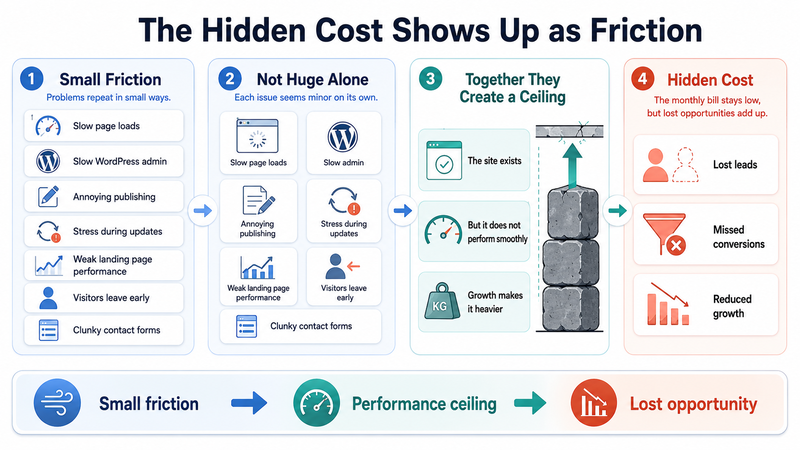
The hidden cost of saving too much on hosting does not always look dramatic. It usually appears as small friction that keeps repeating.
A page takes a little too long to load. The WordPress admin feels slow. Publishing a post becomes annoying. A plugin update causes more stress than expected. A landing page performs worse than it should. A visitor leaves before the page fully loads. A contact form works, but the experience feels clunky.
None of these problems may seem huge on their own.
Together, they create a ceiling.
The site can exist, but it cannot perform smoothly. It can receive traffic, but it may not turn enough of that traffic into results. It can grow in content, but every new feature makes the system heavier.
That is why cheap hosting can become expensive over time. The monthly bill stays low, but the website starts costing you in lost opportunity.
For a deeper breakdown of this pattern, read this article:
https://volodymyrzh.medium.com/why-cheap-hosting-becomes-expensive-over-time-e08193b9387c
Saving money should not mean limiting growth
The goal is not to buy the most expensive hosting possible. That would be another mistake.
The real goal is to choose hosting that matches the stage of the website.
A small personal project may not need much. A simple brochure website may be fine on a basic plan. But a growing business site, an SEO-focused blog, a WooCommerce store, or a lead generation site needs more than the cheapest possible setup.
It needs enough resources to handle growth without breaking the experience.
A better hosting decision usually considers:
how much traffic the site expects;
how dynamic the website is;
how many plugins or integrations are used;
whether the site depends on SEO traffic;
whether speed affects leads or sales;
whether the owner needs a fast admin area;
whether the site may grow over the next year.
This is where the real comparison begins. Not “which plan is cheapest?” but “which plan gives the site enough room to work?”
The real question is what the website is supposed to do
If a website is just a placeholder, cheap hosting may be enough.
But if the website is supposed to attract visitors, build trust, support sales, collect leads, publish content, or run an online store, then hosting becomes part of the business system.
A weak hosting setup may still display the website. But displaying the website is not the same as supporting the website.
There is a big difference between:
a site that loads;
a site that performs;
a site that grows without constant problems.
The hidden cost of saving too much on hosting is that you may not notice the damage immediately. You only feel it later, when traffic grows, expectations rise, and the website starts becoming important.
At that point, the cheaper choice may no longer feel cheap.
Comments
No comments yet. Be the first to comment!