What Makes a Structure Worth Converting Into a Tiny Home?
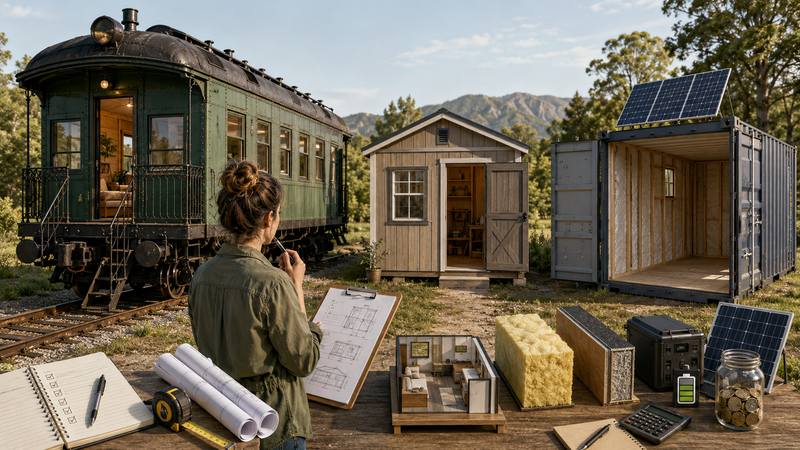
Turning an old structure into a tiny home can feel like a shortcut. The walls are already there. The shape already exists. The place may already have character, history, and a sense of possibility. An old shed, trailer, barn, workshop, shipping container, railcar, or service vehicle can look like the beginning of a beautiful small home.
But not every structure is worth converting.
Some old structures are strong enough to become practical living spaces. Others only look promising from the outside. Once you start checking the roof, floor, frame, insulation options, water damage, transport issues, and legal requirements, the project may become much more complicated than expected.
A good tiny home conversion starts with one practical question:
Does this structure already give you a safe, durable, and usable shell — or will it cost more than building from scratch?
The answer depends on several factors.
Start With the Shell, Not the Style
The first thing to check is not how charming the structure looks. It is whether the basic shell is strong enough to support a real conversion.
A tiny home needs to handle daily use. It needs to protect you from weather. It needs to support furniture, storage, insulation, wiring, and sometimes water tanks, batteries, heating equipment, or solar components. A structure that looks interesting but has a weak frame can quickly become a money trap.
A good shell usually has:
a solid frame;
a floor that is not soft, rotten, or unstable;
a roof that can be repaired or sealed;
walls that can support insulation and interior finishing;
secure openings for doors and windows;
no severe rust, rot, mold, or structural damage.
This is why some forgotten structures work better than others. A weak wooden shed with a leaking roof may be cheap, but it may need so much repair that the original savings disappear. A stronger structure, even if it looks rough at first, may give you a much better starting point.
Some structures are especially interesting because they already have durability, character, and a strong visual identity. A train car is one example. It has a long narrow body, a strong frame, and a built-in sense of movement that makes it feel different from a normal cabin or tiny house.
For a more specific example of this type of conversion, read this guide:
https://medium.com/@volodymyrzh/how-to-turn-an-abandoned-train-car-into-a-home-on-wheels-bfbc7f65c283
Check Whether the Shape Can Become a Real Layout
A structure can be strong and still be difficult to live in. Tiny homes depend heavily on layout. Every meter has to do real work.
Before choosing a structure, imagine the basic living zones:
where you would sleep;
where you would cook;
where you would sit or work;
where storage would go;
where a bathroom or wash area could fit;
where utilities would be placed;
how you would enter and move through the space.
This is where shape becomes important.
A square shed may be easier to divide into simple zones. A trailer may already have a layout logic. A container may be strong but narrow and difficult to insulate well. A train car can be visually amazing, but the long shape requires careful planning because the space can easily become a hallway with furniture instead of a comfortable home.
The best structure is not always the largest one. It is the one that can become a functional living space without forcing every daily activity into an awkward corner.
Make Sure It Can Be Weatherproofed
Weather protection is one of the most important parts of any conversion project. If the structure cannot be made dry, the rest of the project becomes risky.
Water damage can ruin insulation, damage electrical systems, weaken floors, create mold, and make the interior uncomfortable. Even a tiny leak can become a major problem once you add finished walls, flooring, furniture, and storage.
Before starting a conversion, check for:
roof leaks;
rust holes;
rotten wood;
soft flooring;
damaged seals;
water stains;
mold smell;
cracked windows;
poor drainage;
gaps around doors or corners.
A structure worth converting does not have to be perfect. But it needs a realistic path to becoming dry and secure. If you cannot solve the moisture problem, the project is probably not worth starting.
Think About Insulation Early
Insulation often decides whether a tiny home is comfortable or only looks good in photos.
Many old structures were not designed for full-time living. They may get extremely hot in summer, freezing in winter, and damp during temperature changes. This is especially true for metal structures, which transfer heat and cold quickly.
Before you commit to a structure, ask yourself:
Can the walls be insulated?
Can the floor be insulated?
Can the roof be insulated?
Will there still be enough interior space after insulation?
Will condensation become a problem?
Can ventilation be added properly?
Metal structures, including containers and railcars, may need more careful insulation planning than wooden structures. Wooden structures may be easier to modify, but they can hide rot, insects, or moisture damage. There is no perfect material. The important thing is whether the structure can be made comfortable and safe for the way you plan to use it.
Utilities Should Be Possible, Not Just Imagined
A tiny home is not only a room with a bed. Even a simple off-grid setup needs practical systems.
At some point, you may need power, lighting, ventilation, water storage, heating, cooling, internet, a cooking area, and waste management. These systems do not need to be luxurious, but they need to be planned.
A good structure gives you places to route cables, add vents, install batteries, store water, and place equipment safely. A bad structure makes every upgrade difficult.
Before choosing a structure, think about:
where batteries or a portable power station could go;
whether solar panels could be mounted or placed nearby;
how fresh air would enter and leave;
where water tanks could fit;
how heating could be used safely;
whether there is space for a small technical area;
how maintenance access would work.
This is especially important for off-grid or semi-off-grid living. A structure that cannot support basic utilities may still work as a studio, storage space, or seasonal retreat, but not as a serious tiny home.
Match the Structure to the Purpose
Not every tiny home has the same job. A weekend retreat, backyard office, guest cabin, mobile home, and full-time off-grid home all have different requirements.
A small structure may be perfect for occasional use but too limited for daily living. A larger or stronger structure may support full conversion but cost more to move, repair, and finish.
Think about the real purpose before falling in love with the idea.
For example:
Weekend retreat: needs sleeping space, basic lighting, simple cooking, and weather protection.
Backyard office: needs insulation, desk space, electricity, internet, and quiet.
Guest house: needs comfort, privacy, safe access, and basic facilities.
Off-grid cabin: needs energy, water, heat, ventilation, and storage planning.
Full-time tiny home: needs the most complete setup, including comfort, utilities, safety, and long-term maintenance.
A train car, for example, can be a strong candidate for a memorable mobile-style tiny home, but it also creates specific layout and transport challenges. That is why a project like this should be planned carefully from the beginning, not improvised after purchase.
Do Not Ignore Transport and Placement
Some structures are difficult not because they are impossible to convert, but because they are hard to move or place legally.
Before you invest in an old structure, check how it will get to the site. Transport can be expensive, especially if the structure is wide, heavy, fragile, or unusual. You may need special equipment, permits, professional movers, or site preparation.
Placement matters too. A structure may need a foundation, piers, blocking, a trailer base, or a level pad. It may also need access for delivery vehicles.
Ask these questions early:
Can the structure be moved safely?
How much will transport cost?
Is the road access good enough?
Will special equipment be needed?
Can it be placed on the land legally?
Does it need a foundation?
Will it count as a dwelling, vehicle, shed, or temporary structure?
A cheap structure can become expensive very quickly if moving it is complicated.
Check Legal and Safety Issues Before Building
Legal rules vary by location, but they should never be ignored. A tiny home conversion may involve zoning, building permits, land use rules, sanitation requirements, electrical standards, road transport rules, or occupancy limits.
This may sound boring, but it can protect you from wasting money.
A structure can be physically possible to convert and still be difficult to use legally. This is especially true if you want to live in it full-time, rent it out, connect utilities, or place it on rural land.
Before starting, check:
whether tiny homes are allowed in your area;
whether the structure can legally be used as a dwelling;
whether you need permits;
whether electrical or plumbing work must be inspected;
whether full-time living is allowed;
whether transport requires permits;
whether the structure must meet safety standards.
Good planning includes both design and permission. The earlier you check, the fewer surprises you face later.
Be Honest About the Budget
One of the biggest mistakes in conversion projects is assuming that old means cheap.
Sometimes a conversion can save money. But sometimes the opposite happens. The original structure may cost little, but repairs, transport, tools, materials, insulation, wiring, windows, doors, flooring, heating, and finishing can make the total cost much higher than expected.
A realistic budget should include:
purchase price;
transport;
site preparation;
cleaning and demolition;
structural repair;
roof repair;
weatherproofing;
insulation;
windows and doors;
wiring;
lighting;
heating or cooling;
water systems;
interior finishing;
furniture and storage;
permits or professional help;
emergency buffer.
The real question is not “Is the structure cheap?” The real question is “Will the finished result justify the total cost?”
A structure is worth converting when the final home makes sense financially, practically, and emotionally.
Character Is Valuable, But It Is Not Enough
The best tiny home conversions usually have character. That is part of the appeal. A standard new build can be practical, but an old structure can feel more memorable. A converted railcar, bus, barn, boat, or workshop has a story built into it.
But character alone is not enough.
A structure still needs to be safe, dry, stable, usable, and realistic to improve. If it only looks interesting but fails every practical test, it may be better as inspiration than as a real project.
The strongest conversion candidates have both personality and practicality. They feel unique, but they also make sense as living spaces.
That is the balance you should look for.
Final Checklist: Is This Structure Worth Converting?
Before choosing an old structure for a tiny home project, use this simple checklist:
Is the frame strong?
Is the floor stable?
Can the roof be repaired or sealed?
Can the structure be made weatherproof?
Is there enough space for a real layout?
Can it be insulated properly?
Can ventilation be added?
Is there room for power, water, heating, or storage systems?
Can it be transported or placed safely?
Are there legal issues to check?
Does the total budget still make sense?
Does the structure match your real purpose?
Does it have enough character to justify the effort?
If most answers are yes, the structure may be a strong candidate. If many answers are no, it may be better to walk away before the project becomes expensive.
Conclusion
A structure is worth converting into a tiny home when it gives you more than an interesting shape. It should offer a strong shell, a workable layout, realistic weatherproofing, insulation potential, utility options, and a budget that still makes sense.
The best conversion projects do not start with decoration. They start with honest evaluation. You look at the frame, roof, floor, moisture, shape, legal limits, and intended use. Then you decide whether the structure can become a real home.
Old structures can become beautiful tiny homes, but only when the basics work first. Character matters. History matters. Creativity matters. But safety, comfort, and practicality matter more.
Comments
No comments yet. Be the first to comment!